“Sawdust” Is a Category, Not a Specification
For many people, sawdust looks like a simple and uniform material.
For manufacturers, it is anything but uniform.
The characteristics of wood residues can change significantly depending on the type of wood, how it was processed, how long it has been stored and what equipment generated it.
This matters because the raw material becomes the foundation of the final product.
A manufacturer may use the same equipment settings for several months and then experience a sudden change in production quality after receiving sawdust from another supplier.
The machine did not necessarily become worse.
The material changed.
This is one of the most important concepts for anyone planning a sawdust cat litter business.
Wood Species Can Influence Product Behavior
Different woods have different densities and fiber characteristics.
Some residues may be easier to compress.
Others may produce different levels of fines during milling and screening.
The final product may also differ in weight, appearance and mechanical behavior.
For that reason, manufacturers should avoid treating all wood species as interchangeable.
Instead, raw materials should be classified according to their actual processing characteristics.
The objective is not to create complicated paperwork.
It is to create a simple system that tells operators what material they are receiving and how it should be processed.
Particle Size Changes the Entire Process
A factory receiving very fine sawdust may need less size reduction.
Another plant may receive a mixture of sawdust and chips.
The second material may need additional milling before it is suitable for consistent forming.
Particle-size control affects:
- Feeding
- Compression
- Product shape
- Product strength
- Dust generation
- Screening
- Energy consumption
The target should be an appropriate and consistent particle distribution.
Grinding the material excessively can create unnecessary fines and increase energy consumption without necessarily improving the final litter.
Moisture Can Change During Storage
Sawdust does not stay in exactly the same condition after leaving the wood-processing machine.
Storage conditions can change moisture.
An open storage area exposed to rain and humidity behaves differently from a covered indoor warehouse.
Even inside a building, seasonal temperature changes can influence material condition.
This is why manufacturers should check incoming material and avoid relying entirely on historical specifications.
A raw-material database can help the factory identify which suppliers and storage methods produce the most stable feedstock.
Cleanliness Is Particularly Important for Pet Products
Not every wood residue should automatically be considered suitable for cat litter.
Manufacturers should establish strict rules regarding contamination.
Materials associated with:
- Painted wood
- Chemically treated wood
- Construction waste
- Plastic contamination
- Metal fragments
- Excessive soil
- Unknown residues
may require rejection or separate handling depending on the intended product and applicable regulations.
Pet products demand careful raw-material sourcing because the product ultimately enters consumers’ homes.
The simplest strategy is often to establish a clear “clean wood only” supply policy.
What Is the Role of a Specialized Production System?
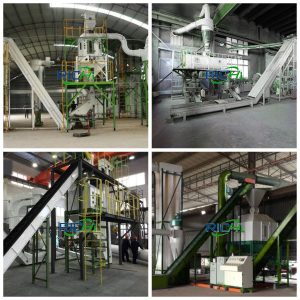
Once raw material has been classified, the processing system can be designed around it.
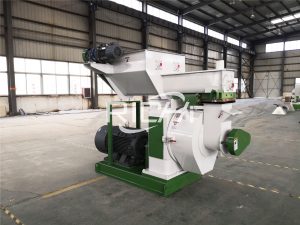
A Sawdust Cat Litter Making Machine should not be selected in isolation.
The manufacturer should consider:
- Material preparation
- Moisture control
- Forming
- Product cooling
- Screening
- Packaging
The system should match the specific raw-material characteristics rather than relying on a generic configuration.
What If the Factory Has Mixed Raw Materials?
Mixed sourcing is common.
A manufacturer may buy sawdust from several woodworking plants because no single supplier can provide enough volume.
This creates an opportunity, but also a challenge.
The factory needs to manage variability.
One option is to pre-blend materials so that the forming section receives a more consistent feed.
Another is to establish separate recipes for different raw-material groups.
For example, the control settings for a fine dry softwood residue may differ from those for a wetter mixed hardwood material.
The best strategy depends on the product and scale.
Storage Can Be a Hidden Production Variable
A factory may spend a great deal of money on sophisticated machinery but neglect storage.
That can undermine the entire process.
Poor storage can lead to:
- Moisture changes
- Contamination
- Material compaction
- Unstable feeding
- Additional screening requirements
A suitable storage system should protect raw material and make it easy to identify different batches.
It should also support FIFO principles where appropriate so that stored material does not remain untouched for excessive periods.
A Realistic Example of Capacity Matching
Imagine a producer receives a steady supply of clean sawdust and wants to manufacture both cat litter and animal bedding.
The company could consider an 1-4 T/H animal bedding pellet machine for sale as one reference category while assessing different configurations.
But the key question should remain:
How much usable material is consistently available, and what percentage will go to each product?
If half of the raw material is allocated to another market, the production plan must reflect that.
This is why capacity should be linked to material flow rather than based solely on market ambition.
Different Products May Need Different Particle Strategies
A cat-litter product and a larger-animal bedding product may not require identical particle dimensions.
Cat litter may prioritize handling, absorption and compact packaging.
Animal bedding may place greater emphasis on volume, moisture retention, spreadability or stable particle size depending on the intended use.
Therefore, if one factory plans to serve multiple applications, the equipment should be flexible enough to accommodate meaningful product changes.
That may involve changes to forming configuration, screening or operating conditions.
What About Dust?
Raw-material structure strongly influences dust.
Very brittle or over-processed material can generate more loose particles.
Dust may also increase when product is repeatedly transferred between machines.
A manufacturer should therefore monitor the material throughout the process.
This includes:
- After milling
- After forming
- After drying
- During cooling
- During screening
- During bagging
The goal is to identify where dust enters the finished product and reduce unnecessary fines before packaging.
Why Product Testing Should Be Repeated
One successful test does not guarantee long-term production stability.
A factory may receive a particularly good batch of raw material during commissioning and then experience completely different conditions later.
For this reason, product testing should continue after commercial production begins.
Manufacturers can monitor:
- Moisture
- Particle size
- Bulk density
- Fines
- Product appearance
- Bag weight
- Storage condition
This data can be used to adjust operating parameters as raw-material conditions change.
What Should Be Done With Off-Spec Material?
No industrial production process is perfectly uniform.
The factory will likely generate some oversized or undersized material.
Instead of automatically treating this as waste, manufacturers should determine whether it can be recycled or reprocessed.
This can improve material utilization.
However, recycling should not be unlimited.
Repeated reprocessing can change the material’s properties and may eventually reduce product quality.
The correct recycling strategy should therefore be established during process design.
Supplier Capability Matters When Raw Material Is Variable
When raw materials are inconsistent, the equipment supplier should ideally have experience with different biomass characteristics.
A supplier may be asked to evaluate:
- Raw-material samples
- Moisture ranges
- Particle-size distribution
- Required product density
- Dryer requirements
- Production capacity
This is more useful than simply asking for a standard machine price.
The supplier’s ability to adapt the system may become especially important for factories sourcing from several regions.
Building a Raw-Material Standard
A useful factory document can be surprisingly simple.
For example:
Material source: Clean woodworking residue
Maximum contamination: Defined by company standard
Particle size: Defined operating range
Moisture: Recorded per incoming batch
Storage: Covered and dry
Supplier: Identified by batch
This creates a common language between purchasing, production and quality-control departments.
The result is greater consistency without excessive administrative complexity.
For technical references about biomass processing and material preparation, blog here can be used as another starting point when researching the subject.
Raw Material Can Become Part of the Brand Story
There is also a marketing opportunity.
A pet-litter brand can potentially communicate where its wood comes from and how the raw material is processed.
Customers may respond positively to clear information about:
- Clean wood sourcing
- Manufacturing transparency
- Material traceability
- Packaging
- Product characteristics
Of course, any environmental or sustainability claims should be supported by appropriate evidence.
But when the supply chain is well controlled, the raw material itself can become part of the product story.
Conclusion
The quality of a sawdust-based bedding product begins long before the pellet machine.
Wood species, particle size, moisture, cleanliness and storage conditions all influence the behavior of the material.
Manufacturers that treat sawdust as a controlled production input rather than an interchangeable waste material can build a more stable manufacturing process.
The result is not only more predictable production.
It also creates a stronger foundation for product development, quality control and long-term commercial growth.