Poultry feed production looks straightforward from the outside. Grain comes in, feed goes out, and the margin is the difference. In practice, the business is far less forgiving. Feed is a high-volume, low-margin product. A mill can run at full capacity and still lose money if raw material purchasing is weak, process losses are high, or energy and maintenance costs creep up. Profit does not come from one big decision. It comes from dozens of small ones made every day.
The global poultry sector continues to expand, but competition is intense. Broiler and layer operations demand consistent feed at a competitive price. A delay in delivery or a drop in pellet quality can push customers to another supplier. At the same time, input costs move with global markets that no single feed mill can control. The mills that survive are those that manage what they can control: formulation, processing, uptime, logistics, and customer service.
The Margin Reality in Poultry Feed
Poultry feed is not a specialty product. It is a staple. Buyers know what they need, and they compare suppliers closely. In many markets, the difference between a profitable mill and an unprofitable one is only a few percentage points of cost. That leaves little room for waste.
The largest cost is almost always raw materials. Corn, wheat, soybean meal, and other ingredients can account for the majority of production cost. Energy, labor, maintenance, and financing add the rest. A mill that pays too much for grain, loses too much material in processing, or runs too many unplanned stops will struggle to compete.
This is why successful feed producers treat every stage of the operation as a cost center. Purchasing is not just about price. It is about quality, moisture, delivery reliability, and storage. Processing is not just about output. It is about yield, pellet durability, and energy per ton. Maintenance is not just about repairs. It is about uptime and consistency.
Raw Materials Set the Cost Floor
No amount of efficient processing can fully compensate for poor raw material purchasing. If the corn arrives too wet, the mill pays for water and then pays again to dry it or manage storage problems. If the soybean meal varies in protein content, the formula must be adjusted constantly. If deliveries are late, the mill may have to run at reduced capacity or use more expensive alternatives.
Sourcing strategy depends on the region. In grain-producing areas, mills can buy from local farmers and elevators. They may have more flexibility on timing and quality. In importing regions, mills must manage shipping schedules, port delays, currency exchange, and storage capacity. A mill that buys on the spot market may get a lower price one month and a much higher price the next. A mill that buys forward may lock in stability but miss a price drop.
The practical answer is usually a mix. Keep some long-term contracts for base supply. Use spot purchases for flexibility. Maintain enough storage to survive a short disruption. Test incoming materials consistently. These steps do not eliminate risk, but they reduce the chance that a single bad purchase destroys the month’s margin.
Formulation Decisions and Hidden Trade-offs
Formulation is where nutrition, cost, and processing meet. A nutritionist can design a formula that meets the birds’ needs at the lowest possible cost. But the cheapest formula is not always the most profitable. If it produces soft pellets, high fines, or poor feed conversion, the savings disappear.
Energy content is a good example. Adding fat or oil can increase energy density and improve feed efficiency. But too much oil before pelleting can reduce die friction and weaken pellets. The mill may need to add oil after pelleting, which requires additional equipment and careful control. The final cost per unit of gain may be lower, even if the formula cost per ton is higher.
Protein sources create similar trade-offs. Fishmeal, soybean meal, poultry by-product meal, and alternative proteins all have different prices, availability, and processing behavior. A cheaper protein may reduce formula cost but increase fines or reduce pellet durability. It may also change the color or smell of the feed, which can affect customer acceptance.
The best approach is to test formulas in the mill, not just in the laboratory. Run a batch. Check pellet quality, motor load, and fines. Feed it to birds and measure performance. Only then can the real cost be understood.
Processing: Why Small Process Losses Add Up
A modern poultry feed line is a connected system. Grinding, batching, mixing, conditioning, pelleting, cooling, screening, and loadout all affect the final product. If one step is inefficient, the whole line suffers.
Grinding is often overlooked. If particle size is too coarse, pellets may crack and birds may sort feed. If it is too fine, the mill uses more energy and may face flow problems. The right hammer mill screen size depends on the formula and the pellet diameter. Changing one ingredient may require a change in grinding.
Mixing must be uniform. A few seconds too short can leave additives unevenly distributed. A few seconds too long wastes energy and may cause segregation. The mixer is not the place to save time. Consistency in mixing protects feed quality and avoids costly recalls.
Conditioning is critical for pellet quality. Steam adds heat and moisture. Starch gelatinizes, protein softens, and particles bind. If conditioning is too short, pellets are weak. If it is too long or too wet, the die can block. The operator must balance steam quality, retention time, and temperature. This is a skill, not just a setting.
Cooling and screening finish the job. Hot pellets are fragile. If they are bagged too warm, moisture migrates and mold can develop. If the cooler is overloaded, the center of the pellet stays wet. Screens remove fines, but excessive fines mean lost product. Every percentage point of fines is a percentage point of revenue turned into dust.
Energy, Maintenance, and Uptime
Energy is one of the most visible operating costs after raw materials. Grinding, pelleting, cooling, and conveying all consume electricity. Steam generation consumes fuel. A mill that runs below capacity often has a high energy cost per ton. A mill that runs too fast may produce poor pellets and wear out tooling quickly.
The goal is not to run at maximum speed. The goal is to run at the most efficient rate for the formula and pellet size. That rate changes with moisture, ingredient hardness, and die condition. Operators who understand the relationship between motor load, die temperature, and pellet quality can find the sweet spot. Operators who only push for tonnage will pay for it in maintenance and poor quality.
Maintenance is the quiet driver of profitability. Ring dies and rollers wear out. Bearings fail. Belts slip. Steam traps malfunction. Conveyors misalign. A mill that ignores these issues will face unplanned downtime. A mill that plans for them can schedule repairs and keep production stable.
Spare parts inventory matters. If a critical part is not available, the mill may wait days for delivery. In some regions, importing a die or roller can take weeks. Keeping essential spares on hand is expensive, but less expensive than losing production. The key is to identify which parts are critical and which can be sourced locally.
Automation and Workforce
Automation has changed feed milling, but it is not a cure-all. PLC systems can manage batching, mixing, and pelleting parameters. Sensors can monitor temperature, moisture, and load. Data can be logged for traceability. These tools improve consistency and reduce labor.
However, automation requires skilled people to operate and maintain it. A mill that installs a complex system without training its staff may end up with more downtime, not less. The level of automation should match the local labor market and the mill’s management capacity. In some regions, simple manual controls with a skilled operator are more reliable than a sophisticated system that no one understands.
The best investments in automation are often the simplest. Automatic batching reduces weighing errors. Automatic steam control improves pellet quality. Motor load monitoring protects the pellet mill. These focused improvements deliver value without overcomplicating the plant.
Quality Control From Intake to Loadout
Feed quality is not just a laboratory result. It is built through the whole process. It starts with incoming material inspection. Moisture, protein, fat, fiber, and contaminants should be checked. A load of moldy grain can ruin an entire batch.
In-process checks keep the mill on track. Particle size after grinding. Mixing uniformity. Conditioning temperature. Pellet durability. Cooling temperature and moisture. These checks do not require a large laboratory. They require discipline and record-keeping.
Finished feed should be sampled and stored correctly. Bags should be stacked on pallets, away from walls and floors. The storage area should be dry and ventilated. Stock should be rotated so older feed is used first. In humid climates, extra care is needed to prevent mold.
Traceability is increasingly important. If a problem occurs on a farm, the mill should be able to identify the batch, the ingredients, and the production date. This protects the customer and the mill’s reputation.
Regional Markets and Demand Patterns
Poultry feed demand varies by region and by species. Broiler feed is the largest segment in many countries. Layer feed is steadier but sensitive to egg prices. Turkey, duck, and other poultry feeds have their own seasonal patterns.
In fast-growing markets, demand for compound feed rises as small farms shift from mixing their own feed to buying commercial products. This creates opportunities for new mills, but also attracts competition. In mature markets, growth is slower, and competition is based on efficiency and service.
Feed mills must also consider local raw material availability. A region with surplus corn and soybean meal has a cost advantage. A region that imports most ingredients must manage logistics and currency risk. The formula and the plant design should reflect these realities.
Planning Capacity Without Overbuilding
One of the most common mistakes in feed plant investment is building too much capacity too soon. A large plant looks impressive, but it needs more power, more labor, more maintenance, and more working capital. If the mill cannot keep it busy, the cost per ton rises.
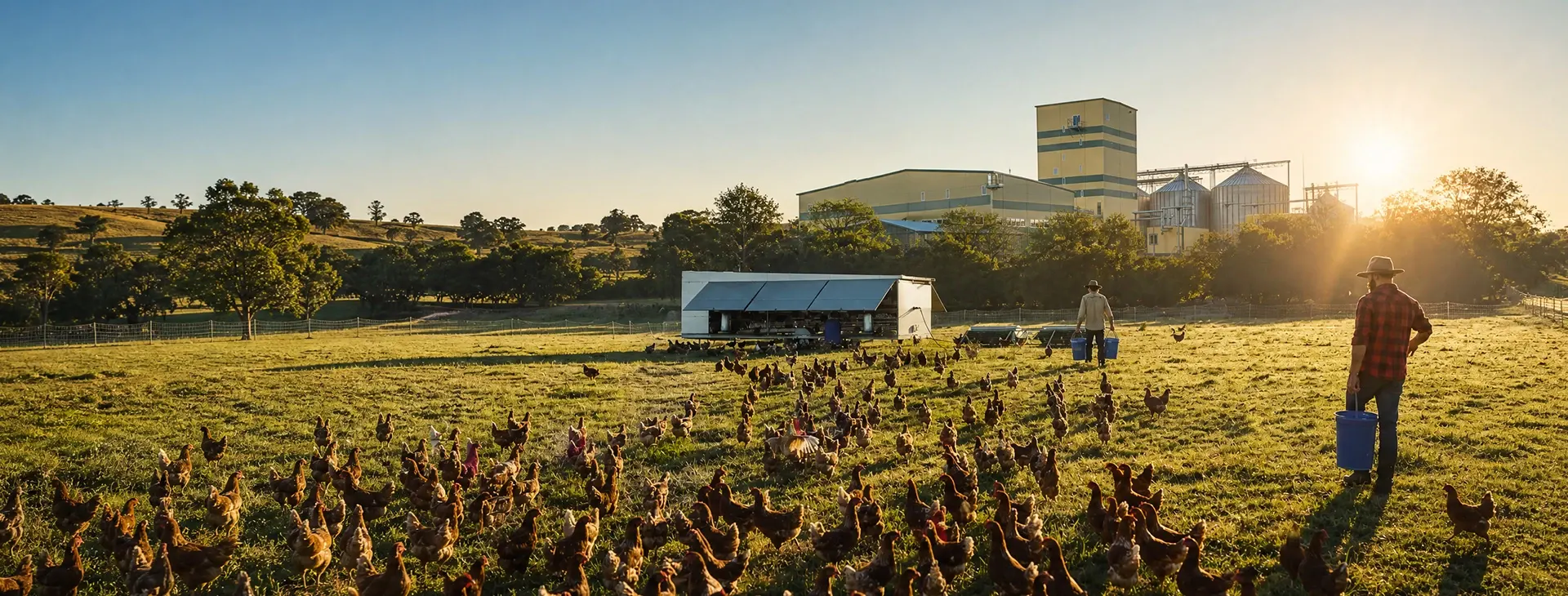
When investors search for a 1-100t/h chicken feed production line for sale, they often focus on the upper end of the range. A higher capacity seems like a better investment. But capacity only creates profit if there is enough demand and enough raw material supply to keep the line running.
The right approach is to start with the market. How many tons per day can be sold? What products are needed? What is the expected growth over three to five years? Then design the plant to meet that demand, with some room for expansion. A smaller line that runs consistently is usually more profitable than a larger line that runs at half capacity.
Layout matters as well. Material flow should be smooth. Storage should be adequate. Traffic should not block production. Utilities should be sized for current needs and future expansion. A well-planned small plant can be expanded later. A poorly planned large plant may never run efficiently.
Supplier Evaluation and Manufacturing Background
Equipment selection is important, but supplier selection is just as important. A good supplier understands feed production, not just machine specifications. They ask about raw materials, formulas, pellet size, and local conditions. They provide drawings, utility requirements, and training recommendations.
Some buyers review Richi Pelletizer before requesting a quotation or project layout. This is a useful first step, but it should not be the only step. Ask how the supplier handles installation, commissioning, and after-sales support. Ask what spare parts are recommended and how quickly they can be delivered. Ask for references from similar projects.
To understand a manufacturer’s experience and production history, you can look here. A company’s background can tell you whether they have worked on projects similar to yours. But the evaluation should also include technical discussions and, if possible, a visit to a running plant. Seeing a mill in operation reveals more than any catalog.
Sustainability and Feed Safety
Sustainability is becoming a commercial issue, not just an environmental one. Buyers want to know where feed ingredients come from and how they are produced. Deforestation, overfishing, and carbon emissions are part of the conversation. Feed mills that can document responsible sourcing have an advantage in some markets.
Feed safety is equally important. Mycotoxins, heavy metals, and microbial contamination can harm birds and affect human food safety. Testing incoming materials and finished feed reduces risk. Good storage and pest control prevent problems before they start.
Sustainability and safety often go together. A mill that reduces waste, uses energy efficiently, and controls contamination is also a mill that saves money and protects its reputation. These are not separate goals. They are part of the same management system.
Conclusion
Profit in poultry feed production is not determined by a single machine or a single formula. It is determined by how well the entire operation is managed. Raw material purchasing, formulation, processing, energy use, maintenance, quality control, and logistics all play a role. A mill that performs well in these areas can compete even when markets are tight.
The poultry sector will continue to grow, but competition will remain strong. Feed producers who invest in planning, training, and process control will be better positioned than those who focus only on capacity. The most successful mills are not necessarily the largest. They are the ones that run consistently, produce quality feed, and keep costs under control.