How Animal Feed Pellet Production Improves Farming Efficiency
Animal feed is one of the most important factors determining the success of modern livestock farming. Whether raising goats, cattle, sheep, poultry, pigs, or other farm animals, the quality and efficiency of feed management directly influence animal growth, health, production performance, and overall farm profitability. As the livestock industry continues to expand, farmers are increasingly focusing on improving feed efficiency, reducing production costs, and utilizing agricultural resources more effectively.
Animal feed pellet production has become an important technology for achieving these goals. By processing various feed ingredients into compact and uniform pellets, farmers can improve nutrient utilization, reduce feed waste, simplify storage and transportation, and provide animals with more balanced nutrition. Compared with traditional powder feed or loose feed materials, pellet feed offers significant advantages in feeding management and production efficiency.
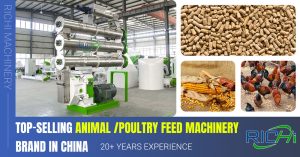
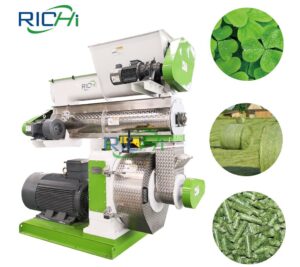
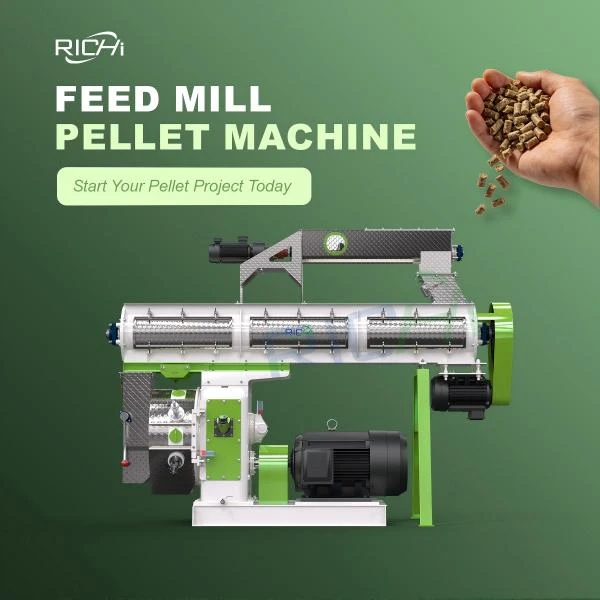
Modern feed pellet production relies on advanced equipment designed for different livestock requirements. For example, a goat feed pellet machine is specially developed to process forage, grains, protein sources, and other ingredients into nutritious pellets suitable for goat feeding. By using efficient pelletizing technology, farmers can produce high-quality feed that supports better animal performance and more sustainable farming operations.
This article explains how animal feed pellet production improves farming efficiency and why more livestock producers are adopting pellet feed technology.
1. The Importance of Feed Efficiency in Livestock Farming
Feed efficiency refers to the ability of animals to convert feed nutrients into valuable products such as meat, milk, eggs, and breeding performance. Higher feed efficiency means animals can achieve better results with less feed consumption.
Improving feed efficiency is important because feed usually represents the largest operating cost in livestock production. When feed is wasted or nutrients are poorly utilized, production costs increase and farm profitability decreases.
Efficient feed management helps farmers:
- Reduce feed expenses
- Improve animal growth rates
- Increase production output
- Minimize feed waste
- Maintain stable animal health
Traditional feeding methods often create challenges such as uneven nutrient intake, feed separation, and material losses. Animal feed pellet production provides a practical solution by creating standardized feed products that animals can consume more effectively.
2. Challenges of Traditional Animal Feeding Methods
Before the development of modern pellet feed technology, many farms relied on loose feed mixtures, grains, hay, and agricultural residues. Although these materials can provide nutrients, they also have several disadvantages.
Uneven Nutrient Distribution
When different feed ingredients are mixed in powder form, animals may selectively consume certain components. For example, livestock may prefer grains while leaving behind fibrous ingredients, resulting in an unbalanced diet.
High Feed Waste
Loose feed can easily fall onto the ground during transportation and feeding. Contaminated feed is often discarded, increasing production costs.
Difficult Storage
Powder feed and agricultural residues may require large storage spaces and are more vulnerable to moisture, pests, and spoilage.
Transportation Inefficiency
Low-density feed materials require more space and increase transportation expenses.
Animal feed pellet production addresses these problems by transforming loose ingredients into dense, uniform pellets.
3. What Is Animal Feed Pellet Production?
Animal feed pellet production is the process of converting powdered or mixed feed ingredients into compact cylindrical pellets through mechanical compression.
The production process usually includes:
- Raw material preparation
- Grinding
- Mixing
- Conditioning
- Pelletizing
- Cooling
- Screening
- Packaging
During pelletizing, feed materials pass through a die under high pressure. Rollers compress the material through die holes, creating pellets with consistent size and density.
Different types of livestock require different feed formulas and pellet characteristics. For example, poultry feed pellets may focus on high protein content, while goat feed pellets require sufficient fiber for healthy digestion.
A goat feed pellet machine is designed to process goat feed formulas efficiently, including grass, alfalfa, corn, soybean meal, wheat bran, minerals, and other ingredients. It helps farmers produce balanced feed that meets the nutritional requirements of goats.
https://richipelletizer.com/goat-feed-pellet-making-machine
4. Improving Nutrient Utilization
One of the biggest advantages of feed pellet production is improved nutrient utilization.
In traditional feeding systems, animals may waste certain ingredients because of differences in taste, texture, and particle size. Pelletizing solves this problem by combining all ingredients into a single uniform pellet.
Benefits include:
Complete Ingredient Consumption
Animals consume the entire pellet, ensuring they receive all nutrients included in the formula.
Reduced Feed Selection
Livestock cannot easily separate preferred ingredients from less desirable ones.
Balanced Nutrition Intake
Each pellet contains a consistent nutrient composition.
Better Digestibility
Grinding and conditioning during production improve feed structure and make nutrients easier to absorb.
For animals such as goats, balanced nutrient intake is essential for improving weight gain, milk production, and reproductive performance.
5. Reducing Feed Waste
Feed waste is a major concern in livestock production. Even small reductions in waste can significantly improve farm profitability.
Pellet feed helps reduce waste in several ways:
Improved Feed Handling
Pellets are less likely to scatter during transportation and feeding.
Better Animal Consumption
Animals can consume pellets more completely compared with loose feed.
Reduced Dust Loss
Pelletizing reduces fine particles that may be lost during handling.
Easier Feed Management
Farmers can accurately measure feed quantities and monitor consumption.
For large-scale livestock farms, reducing feed waste can create significant economic benefits over time.
6. Increasing Feed Storage and Transportation Efficiency
Storage and transportation efficiency are important factors affecting farm operating costs.
Pellet feed has higher density than traditional powder feed, which provides several advantages:
- Requires less storage space
- Reduces transportation frequency
- Improves warehouse management
- Extends feed storage stability
Pellets are also easier to package and distribute. This is especially valuable for commercial feed producers supplying multiple farms.
By improving logistics efficiency, pellet production helps reduce the overall cost of feed supply chains.
7. Supporting Customized Animal Nutrition
Different livestock species have different nutritional requirements. Modern pellet production allows farmers and feed manufacturers to create customized feed formulas.
For example:
Goat Feed
Goats require adequate fiber, minerals, and energy. A goat feed formula may include:
- Alfalfa
- Grass meal
- Corn
- Soybean meal
- Wheat bran
- Mineral supplements
A goat feed pellet machine can process these ingredients into uniform pellets suitable for different goat production stages.
(Related machine: efficient sheep feed pellet machine )
Cattle Feed
Cattle feed pellets often emphasize fiber and energy balance.
Poultry Feed
Poultry pellets focus on protein, vitamins, and minerals for rapid growth.
Sheep Feed
Sheep require balanced nutrients to support wool production, growth, and reproduction.
Customized pellet production allows farmers to optimize feed according to animal age, breed, and production goals.
8. Improving Animal Growth Performance
High-quality pellet feed can improve animal performance because it provides consistent nutrition.
Benefits include:
Faster Growth
Balanced nutrients support efficient weight gain.
Improved Feed Conversion Ratio
Animals produce more output from the same amount of feed.
Better Health
Proper nutrition strengthens immunity and reduces nutritional deficiencies.
Stable Production
Consistent feed quality helps maintain predictable farming results.
For goat farms, properly formulated pellets can support:
- Higher body weight gain
- Improved milk production
- Better reproductive performance
Feed quality is therefore closely connected with livestock productivity.
9. The Role of Feed Pellet Machines in Production Efficiency
The quality of pellet production equipment directly affects feed quality and operating costs.
Modern feed pellet machines provide:
Stable Pellet Formation
Advanced compression systems ensure uniform pellet size and density.
High Production Capacity
Industrial pellet machines can operate continuously to meet large-scale demand.
Energy Efficiency
Optimized designs reduce electricity consumption.
Easy Operation
Automatic control systems simplify production management.
Different livestock feed applications require different machine configurations. For goat farming operations, a reliable goat feed pellet machine provides an efficient way to produce high-quality feed using locally available ingredients.
Choosing suitable equipment helps farmers improve production efficiency while reducing operational challenges.
10. Improving Farm Labor Efficiency
Feed preparation can require significant labor, especially when farms use multiple raw ingredients.
Traditional feeding methods may involve:
- Manual mixing
- Frequent transportation
- Separate ingredient storage
- Repeated feed preparation
Pellet feed simplifies these processes.
Farmers can:
- Store finished pellets easily
- Transport feed efficiently
- Use automatic feeding systems
- Reduce manual labor requirements
Improved labor efficiency allows farmers to focus on other important activities such as animal health management and farm expansion.
11. Supporting Sustainable Farming Practices
Animal feed pellet production also contributes to sustainable agriculture.
Better Resource Utilization
Agricultural byproducts such as straw, grass, and crop residues can be processed into valuable feed.
Reduced Waste
Pelletizing improves feed utilization and minimizes material losses.
Lower Transportation Impact
Dense pellets require fewer transportation resources.
Efficient Land Use
Higher feed efficiency reduces the amount of resources needed to produce animal products.
These advantages support environmentally responsible livestock farming.
12. Applications of Animal Feed Pellet Production
Feed pellet production is widely used in many farming sectors.
Goat Farming
Goat farms use pellets to provide balanced nutrition and improve feeding efficiency.
Cattle Farming
Pellets help cattle producers manage feed supply and improve growth performance.
Sheep Farming
Pellets provide convenient forage-based nutrition.
Poultry Farming
Pellet feed improves feed intake and production efficiency.
Pig Farming
Pellets support balanced diets and efficient growth.
The flexibility of pellet production makes it suitable for farms of different sizes and production models.
13. Establishing an Animal Feed Pellet Production Line
A complete feed pellet production line usually includes:
- Raw material receiving system
- Crusher
- Mixer
- Conditioner
- Pellet machine
- Cooler
- Screening equipment
- Packaging system
The pellet production line design depends on:
- Animal species
- Feed formula
- Production capacity
- Raw material availability
- Investment budget
For small farms, a compact pellet production system may be sufficient. Large commercial operations may require automated production lines with higher capacity.
Professional equipment suppliers can provide customized solutions to match specific farming requirements.
14. Future Trends in Animal Feed Pellet Production
The future of animal feed production will continue moving toward higher efficiency, automation, and sustainability.
Important trends include:
Intelligent Feed Production
Automation systems will improve production control and reduce labor requirements.
Precision Nutrition
Feed formulas will become more customized according to animal needs.
Sustainable Ingredients
More agricultural byproducts will be used as feed resources.
Energy-Efficient Equipment
New pellet machines will reduce production costs and improve environmental performance.
As livestock industries continue developing, feed pellet production will remain an important technology for improving farming efficiency.
Conclusion
Animal feed pellet production improves farming efficiency by increasing nutrient utilization, reducing feed waste, simplifying storage and transportation, and supporting customized animal nutrition. Compared with traditional loose feed systems, pellet feed provides better consistency, convenience, and economic benefits.
The goat feed pellet machine and other specialized pelletizing equipment play an important role in transforming different feed ingredients into high-quality livestock feed pellets. Through advanced production technology, farmers can improve animal performance, reduce operating costs, and achieve more sustainable livestock production.
As global demand for animal products continues to grow, efficient feed management will become increasingly important. Animal feed pellet production provides a practical solution that helps farmers maximize resources, improve productivity, and build more profitable farming operations.