Livestock farming plays a vital role in global food production, providing essential sources of meat, milk, and other animal products. As demand for animal-based protein continues to grow, farmers are under increasing pressure to improve productivity, reduce costs, and operate more efficiently. One of the most effective ways to achieve these goals is through modern livestock feed production systems.
Efficient feed production ensures that animals receive balanced nutrition, improves feed conversion rates, reduces waste, and enhances overall farm profitability. With the help of advanced equipment and automated systems, farms can now produce high-quality feed more consistently and economically than ever before.
This article explores how livestock feed production improves farm efficiency and examines the technologies, processes, and equipment that make modern animal nutrition systems more effective.
The Importance of Livestock Feed in Farm Productivity
Feed represents the largest cost in livestock farming, often accounting for 60% to 80% of total production expenses. Because of this, improving feed efficiency directly impacts farm profitability.
High-quality feed contributes to:
- Faster animal growth
- Improved milk and meat production
- Better animal health
- Reduced disease risk
- Higher feed conversion efficiency
When feed is poorly formulated or inconsistently mixed, animals may suffer from nutritional deficiencies, reduced productivity, and increased mortality rates.
Therefore, optimizing feed production is essential for sustainable and profitable livestock farming.
What Is Livestock Feed Production?
Livestock feed production refers to the process of preparing, mixing, and processing raw ingredients into balanced feed formulations for animals such as cattle, poultry, pigs, and sheep.
Common feed ingredients include:
- Corn
- Soybean meal
- Wheat bran
- Barley
- Rice bran
- Alfalfa
- Mineral supplements
- Vitamin premixes
These ingredients must be carefully selected and combined to ensure animals receive the correct balance of nutrients, including proteins, carbohydrates, fats, vitamins, and minerals.
Modern feed production systems rely heavily on mechanical equipment and automation to ensure accuracy and consistency. (use this link)
How Feed Production Improves Farm Efficiency
Efficient feed production improves farm operations in multiple ways:
1. Better Nutritional Balance
Precision mixing ensures animals receive the right nutrients in the correct proportions.
2. Reduced Feed Waste
Proper formulation reduces leftover feed and improves digestion efficiency.
3. Improved Feed Conversion Ratio (FCR)
Animals convert feed into body mass more efficiently, reducing overall feeding costs.
4. Enhanced Animal Health
Balanced diets reduce disease risk and improve immunity.
5. Lower Labor Costs
Automation reduces the need for manual feed preparation.
Together, these benefits significantly improve overall farm efficiency.
Raw Material Selection and Quality Control
The foundation of efficient feed production is high-quality raw materials.
Farmers and feed producers must ensure ingredients are:
- Fresh and uncontaminated
- Properly stored
- Nutritionally consistent
- Free from mold or toxins
Poor-quality ingredients can lead to:
- Reduced animal performance
- Health problems
- Feed spoilage
- Financial losses
Quality control begins at the sourcing stage and continues throughout the production process.
Feed Formulation and Nutritional Design
Feed formulation is a critical step in livestock feed production.
It involves calculating the precise ratio of ingredients based on:
- Animal species
- Growth stage
- Production goals (meat, milk, eggs)
- Environmental conditions
For example:
Dairy Cattle Feed
Requires high levels of energy and protein to support milk production.
Beef Cattle Feed
Focuses on growth efficiency and weight gain.
Poultry Feed
Requires balanced protein and energy for egg and meat production.
Accurate formulation ensures animals receive optimal nutrition, which directly improves farm efficiency.
The Role of Grinding in Feed Production
Grinding is an important step that reduces particle size of raw materials.
Smaller particle sizes:
- Improve digestibility
- Enhance nutrient absorption
- Increase feed uniformity
Common grinding equipment includes hammer mills and crushers.
Proper grinding improves feed texture and ensures smoother mixing in later stages.
Mixing: The Core of Feed Production Efficiency
Mixing is one of the most important stages in feed production.
It ensures that all ingredients are evenly distributed so that each feed portion contains the correct nutrient balance.
Poor mixing can lead to:
- Nutritional imbalance
- Reduced animal performance
- Feed segregation
Types of Feed Mixers
- Horizontal mixers
- Vertical mixers
- Ribbon mixers
- Paddle mixers
Among these, horizontal mixers are widely used in commercial feed production due to their efficiency and uniform mixing performance. (Learn more about high-efficiency livestock feed mixer for sale)
Importance of the Cattle Feed Mixer Machine
In cattle farming, feed consistency is especially important because cattle require large volumes of balanced feed daily.
A cattle feed mixer machine ensures that ingredients such as grains, protein meals, vitamins, and minerals are evenly distributed throughout the feed batch.
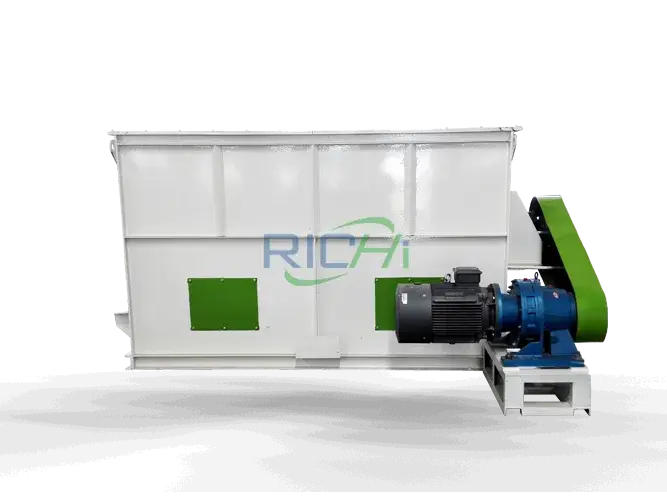
Key benefits include:
Uniform Nutrition
Every portion of feed contains consistent nutrients.
Improved Feed Intake
Cattle consume feed more efficiently when texture and composition are uniform.
Reduced Feed Loss
Proper mixing prevents selective eating behavior in animals.
Higher Productivity
Better nutrition leads to increased milk and meat output.
Farmers often consider the cattle feed mixer machine price when planning investments, as equipment cost directly affects farm budget and long-term profitability. However, it is important to evaluate not only the initial price but also durability, capacity, energy consumption, and maintenance costs.
https://richipelletizer.com/cattle-feed-mixer-machine-price
Pelletizing and Feed Processing Technologies
Many modern farms use pelletized feed instead of loose feed.
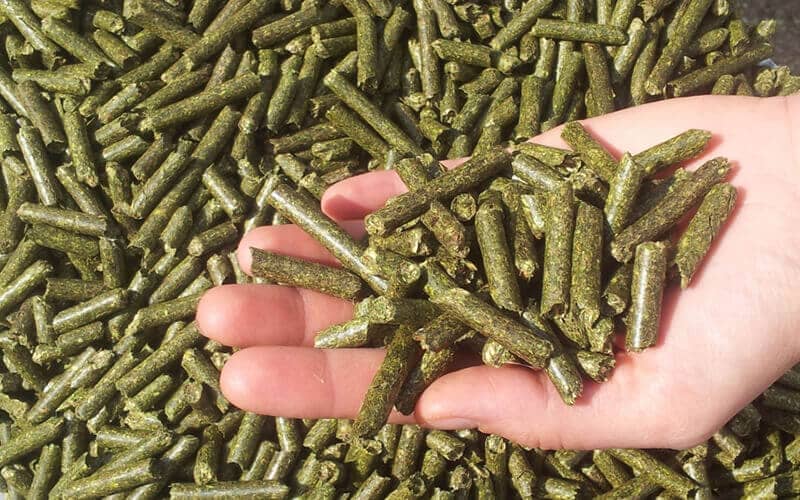
Pelletizing involves compressing mixed feed into uniform pellets.
Advantages include:
- Improved feed digestion
- Reduced feed wastage
- Easier storage and transportation
- Enhanced feed intake
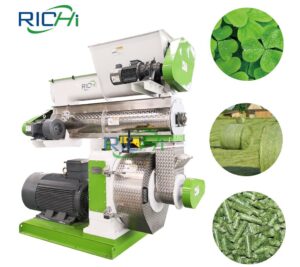
Pellet mills are commonly used in large-scale livestock operations.
Automation in Feed Production Systems
Automation has revolutionized livestock feed production.
Modern systems include:
- Automatic batching systems
- Computerized formulation control
- Conveyor feeding systems
- Real-time monitoring sensors
Benefits of automation:
- Higher accuracy
- Reduced human error
- Lower labor costs
- Improved efficiency
Automation allows farms to produce feed consistently and at scale.
Storage and Feed Handling Efficiency
Proper storage plays a crucial role in maintaining feed quality.
Feed should be stored in:
- Dry environments
- Temperature-controlled facilities
- Pest-free storage systems
Poor storage conditions can lead to:
- Mold growth
- Nutrient loss
- Contamination
Efficient storage systems ensure long-term feed quality and reduce waste.
Cost Control in Livestock Feed Production
Cost management is essential for improving farm efficiency.
Major cost factors include:
- Raw materials
- Equipment investment
- Labor costs
- Energy consumption
- Maintenance expenses
Among equipment investments, many farmers evaluate the cattle feed mixer machine price carefully before purchasing, as it directly impacts capital expenditure.
However, choosing low-cost equipment without considering performance may lead to higher long-term operational costs.
How Feed Production Reduces Farm Costs
Efficient feed production helps reduce overall farming costs in several ways:
Lower Feed Waste
Accurate formulation reduces overfeeding.
Improved Feed Efficiency
Animals gain more weight or produce more milk per unit of feed.
Reduced Veterinary Costs
Better nutrition improves immunity and reduces disease.
Lower Labor Requirements
Automation reduces manual work.
These savings significantly improve farm profitability.
Environmental Benefits of Efficient Feed Production
Modern feed production systems also contribute to environmental sustainability.
Benefits include:
- Reduced agricultural waste
- Lower greenhouse gas emissions
- Efficient resource utilization
- Reduced land usage
Sustainable feed production supports long-term agricultural development.
Challenges in Livestock Feed Production
Despite its benefits, feed production also faces challenges:
Fluctuating Raw Material Prices
Feed ingredient costs can vary significantly.
Equipment Investment Costs
Advanced machinery requires initial capital investment.
Technical Skill Requirements
Operators must understand formulation and machine operation.
Quality Control Complexity
Maintaining consistent feed quality requires monitoring.
Addressing these challenges requires proper planning and investment.
Future Trends in Feed Production
The livestock feed industry is evolving rapidly.
Key trends include:
- Smart feed formulation systems
- AI-based nutritional optimization
- Automated production lines
- Precision livestock feeding
- Sustainable feed ingredients
These innovations will further improve farm efficiency in the future.
Conclusion
Livestock feed production plays a crucial role in improving farm efficiency by optimizing animal nutrition, reducing waste, lowering costs, and increasing productivity. Through modern technologies and automation, farmers can produce high-quality feed with greater consistency and accuracy than ever before.
Equipment such as the cattle feed mixer machine is essential for ensuring uniform feed quality, while careful evaluation of factors like the cattle feed mixer machine price helps farmers make cost-effective investment decisions. (view our website: Richi Machinery)
As global demand for animal protein continues to rise, efficient feed production systems will remain a key driver of sustainable and profitable livestock farming.