Goat farming can be a profitable agricultural business, but achieving good farm performance requires more than simply keeping healthy animals. Feed quality, feeding management, forage availability, animal genetics, housing, disease prevention, and overall farm management all influence growth, reproduction, milk production, and profitability. Among these factors, nutrition is one of the most important because feed directly provides the energy, protein, minerals, and other nutrients that goats need every day.
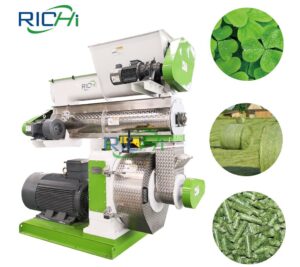
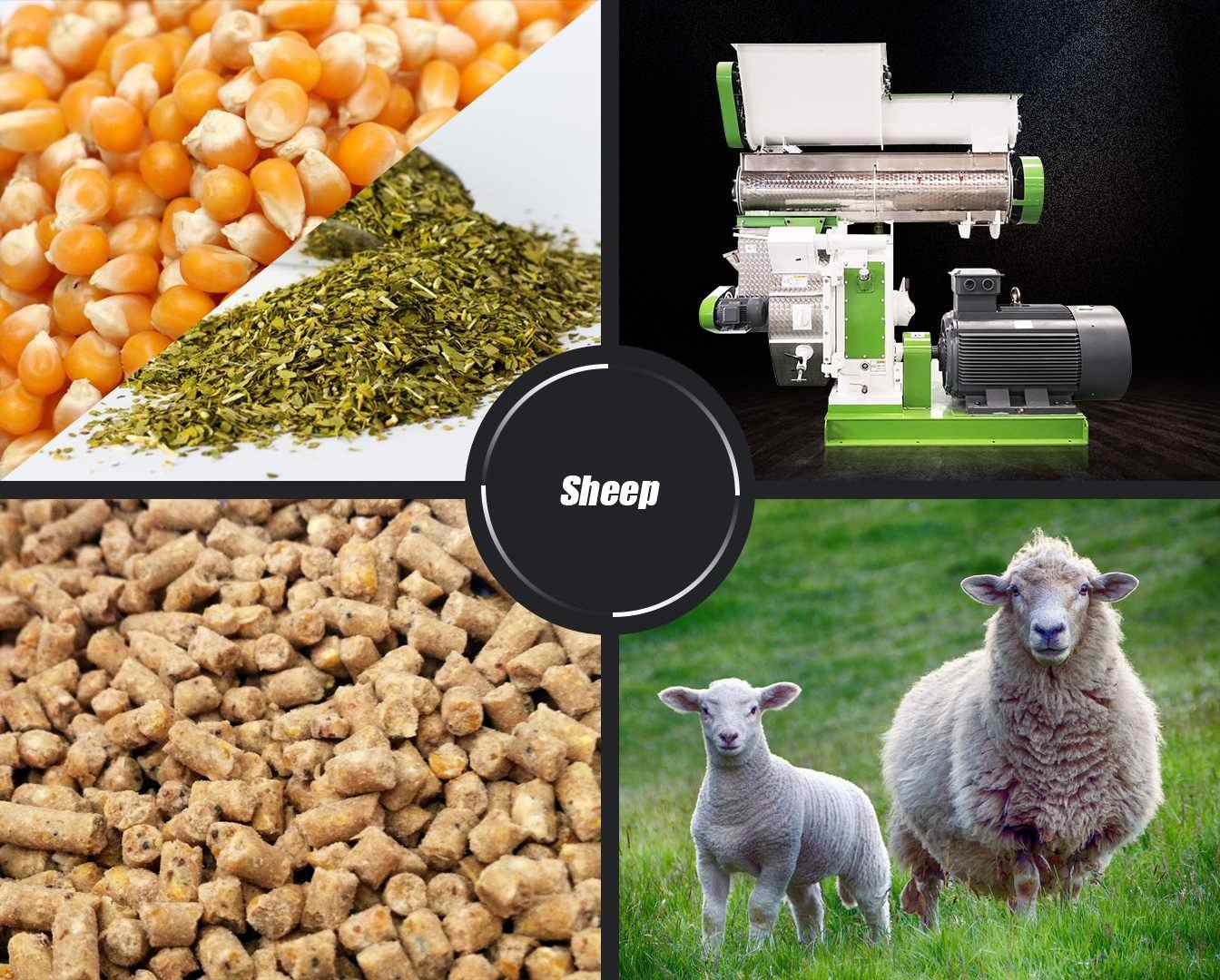
A well-designed goat feeding program should provide balanced nutrition while making efficient use of available forage, grains, agricultural by-products, and protein sources. For many farms, converting suitable feed ingredients into pellets can make feeding easier and improve the consistency of the ration. A properly configured goat feed pellet making machine can process a formulated mixture into uniform pellets that are convenient to transport, store, and distribute.
This article explains how to produce goat feed for better farm performance, including ingredient selection, feed formulation, processing, pelleting, storage, feeding management, and equipment selection.
1. Why Is Feed Important for Goat Farm Performance?
Feed is the foundation of goat production.
Goats require nutrients for:
- Body maintenance
- Growth
- Muscle development
- Reproduction
- Milk production
- Pregnancy
- Lactation
- Immune function
If goats do not receive sufficient nutrients, they may experience slow growth, poor body condition, reduced reproductive performance, lower milk production, and increased susceptibility to health problems.
On the other hand, providing excessive nutrients can increase feed costs without necessarily improving performance.
Therefore, the goal is to provide a balanced ration that matches the physiological requirements of the animals.
2. Different Goats Have Different Feed Requirements
One of the most important principles of goat nutrition is that there is no single feed formula suitable for every goat.
Feed requirements vary according to:
- Age
- Body weight
- Breed
- Growth stage
- Pregnancy
- Lactation
- Reproductive status
- Production target
- Forage quality
For example, young goats need sufficient protein and energy for growth, while lactating does require additional nutrients to support milk production.
Pregnant does also need appropriate nutrition, particularly during the later stages of pregnancy when fetal growth accelerates.
Adult goats maintained mainly for breeding may require a different feeding program from rapidly growing meat goats.
3. Start with Good-Quality Forage
Goats are ruminants and forage should generally be an important component of their diet.
Suitable forage may include:
- Alfalfa
- Grass hay
- Clover
- Timothy
- Rhodes grass
- Napier grass
- Legume hay
- Crop residues
- Other suitable pasture plants
Good-quality forage provides fiber that supports normal rumen function.
The nutritional value of forage depends on:
- Plant species
- Harvest stage
- Moisture
- Drying method
- Storage conditions
- Soil conditions
- Leaf-to-stem ratio
High-quality forage can reduce the amount of expensive concentrate feed needed.
4. Use Local Feed Ingredients
Goat feed does not necessarily need to depend entirely on commercially purchased ingredients.
Depending on the region, farms may have access to:
- Corn
- Barley
- Wheat
- Sorghum
- Oats
- Wheat bran
- Rice bran
- Soybean meal
- Sunflower meal
- Rapeseed meal
- Peanut meal
- Cassava products
- Molasses
- Agricultural by-products
Local ingredients can help reduce transportation expenses and provide greater flexibility in feed production.
However, local ingredients should be evaluated for nutritional value, safety, moisture, contamination, and availability before they are included in a feed formula.
5. Energy Sources for Goat Feed
Energy is required for maintenance, growth, reproduction, and production.
Common energy sources include:
Corn
Corn is rich in starch and can provide concentrated energy.
Barley
Barley can also provide energy and is used in some livestock feed formulas.
Sorghum
Sorghum can be useful in regions where it is locally available and competitively priced.
Wheat Bran
Wheat bran contributes energy, protein, and fiber.
Rice Bran
Rice bran can provide energy and fat but should be stored properly to avoid deterioration.
The appropriate combination depends on the nutritional requirements of the goats and the cost and availability of ingredients.
6. Protein Sources
Protein is essential for muscle development, reproduction, growth, and milk production.
Potential protein sources include:
- Soybean meal
- Sunflower meal
- Rapeseed meal
- Peanut meal
- Alfalfa
- Legume hay
- Other suitable protein ingredients
Protein quality is determined not only by crude protein content but also by amino acid composition and digestibility.
Young growing goats and lactating does may have higher protein requirements than mature goats maintained for basic maintenance.
7. Fiber Is Essential for Goats
Because goats are ruminants, fiber is a critical part of their diet.
Adequate fiber helps support:
- Rumen function
- Normal chewing activity
- Saliva production
- Healthy fermentation
- Proper digestion
Possible fiber sources include:
- Hay
- Grass
- Alfalfa
- Straw
- Forage crops
- Suitable agricultural by-products
However, not all fibrous materials have the same nutritional value.
Low-quality, heavily lignified materials may provide relatively little usable nutrition.
Therefore, forage quality should be considered when designing the complete ration.
8. Minerals and Vitamins
Goats require minerals and vitamins for normal physiological functions.
Important minerals can include:
- Calcium
- Phosphorus
- Magnesium
- Sodium
- Potassium
- Zinc
- Copper
- Selenium
- Other trace minerals
The exact requirements depend on animal condition, production stage, forage composition, and local conditions.
A mineral premix may be incorporated into concentrate feed where appropriate.
However, mineral supplementation should be carefully formulated because both deficiencies and excessive intake can cause problems.
9. Water Is Part of the Feeding Program
Water is sometimes overlooked when discussing animal feed, but it is essential for goat production.
Goats should have regular access to clean, fresh water.
Water requirements vary depending on:
- Temperature
- Feed moisture
- Milk production
- Body size
- Activity level
Lactating goats generally require particularly reliable access to water.
Poor water availability can reduce feed intake and negatively affect production performance.
10. Develop a Balanced Goat Feed Formula
Once suitable ingredients have been identified, the next step is feed formulation.
A balanced formula should consider:
- Energy
- Crude protein
- Fiber
- Minerals
- Vitamins
- Feed intake
- Animal age
- Production stage
A typical concentrate may contain a combination of grains, protein meals, bran, mineral supplements, and other ingredients.
However, exact inclusion rates should be determined according to the animals’ nutritional requirements and the nutritional analysis of the ingredients.
It is not advisable to copy a formula from another farm without considering differences in forage quality, breed, climate, and production objectives.
11. Use Forage and Pellets Together
Goat pellets do not necessarily need to replace forage.
In many production systems, forage and concentrate feed are used together.
For example:
Forage + Goat Feed Pellets + Minerals + Clean Water
can form the basis of a managed feeding system.
Forage provides important structural fiber, while pellets can provide concentrated nutrients in a controlled and uniform form.
The balance between forage and concentrate should depend on the type of goats and the farm’s production goals.
12. Why Make Goat Feed Pellets?
Pelleting offers several advantages for goat farms.
Uniform Nutrient Distribution
If ingredients are properly mixed before pelleting, each pellet can contain a relatively consistent combination of feed ingredients.
Easier Handling
Pellets are easier to transport and distribute than loose mixtures.
Reduced Ingredient Separation
Pelleting can reduce the separation of heavier and lighter particles.
Lower Dust
Compared with finely ground feed, properly produced pellets can reduce dust during handling.
Convenient Storage
Pellets can be packed and stored efficiently when properly dried and cooled.
Better Use of Agricultural By-Products
Some suitable local materials can be incorporated into a pellet formula after appropriate processing.
13. Selecting a Goat Feed Pellet Making Machine
The pellet mill is the key piece of equipment for producing goat feed pellets.
A suitable goat feed pellet making machine should be selected according to:
- Production capacity
- Feed formula
- Raw material type
- Pellet diameter
- Operating hours
- Automation requirements
- Maintenance requirements
- Available budget
Small farms may require a compact pellet machine for on-farm production.
Commercial goat farms or feed manufacturers may require a larger ring-die pellet mill and a complete production line.
The equipment should match the farm’s actual feed demand rather than simply being selected according to maximum machine capacity.
https://pelletisingmachine.com/goat-feed-pellet-making-machine
14. Flat-Die and Ring-Die Pellet Mills
There are two common types of pellet machines used in livestock feed production.
Flat-Die Pellet Mill
Flat-die machines are often suitable for small-scale production.
Advantages may include:
- Compact structure
- Simple operation
- Easy maintenance
- Lower initial investment
- Flexible installation
They can be suitable for farms that produce relatively small quantities of feed.
Ring-Die Pellet Mill
Ring-die pellet mills are commonly used for larger commercial production.
They can provide:
- Higher throughput
- More continuous operation
- Greater production efficiency
- Stable pellet quality
The choice should depend on the desired capacity and production model.
15. Prepare the Raw Materials Before Pelleting
Raw materials should be properly prepared before entering the pellet mill.
The basic process may include:
Cleaning → Crushing → Batching → Mixing → Conditioning → Pelleting
Cleaning removes foreign materials.
Grinding reduces particle size.
Batching ensures accurate ingredient proportions.
Mixing distributes the ingredients uniformly.
Conditioning improves the material’s ability to form durable pellets.
Proper preparation helps the goat feed pellet making machine operate more efficiently.
16. Grinding Goat Feed Ingredients
A hammer mill is commonly used to grind grains and other dry feed ingredients.
Proper grinding can improve:
- Mixing uniformity
- Pellet formation
- Pellet durability
- Feed consistency
However, excessive grinding can increase electricity consumption and dust generation.
The appropriate particle size depends on the feed formula and pellet specifications.
Fibrous forage materials may also require specialized processing equipment if they are to be incorporated into a pelletized concentrate or complete feed.
17. Accurate Batching and Mixing
After grinding, ingredients should be accurately weighed.
A small farm may use manual weighing.
A commercial facility can use an automatic batching system.
After batching, ingredients are mixed thoroughly.
The mixer should distribute:
- Grains
- Protein sources
- Bran
- Minerals
- Vitamins
- Additives
uniformly throughout the batch.
Uniform mixing is especially important when the formula contains small quantities of vitamins, minerals, or other additives.
18. Conditioning Before Pelleting
Steam conditioning can improve the pelletizing process.
The feed mixture is exposed to heat and moisture before entering the pellet mill.
Conditioning can:
- Soften feed particles
- Improve binding
- Increase pellet durability
- Improve pellet mill throughput
- Reduce fines
- Potentially reduce energy consumption
The ideal conditioning parameters depend on the feed formula.
Too little conditioning may produce weak pellets, while excessive moisture can make cooling and storage more difficult.
19. Pellet Diameter Matters
The appropriate pellet size depends on goat age and feeding management.
Young goats may benefit from smaller pellets that are easier to consume.
Adult goats can generally handle larger feed particles.
The pellet diameter is controlled by the die installed in the pellet machine.
A flexible production system can use different dies to produce multiple pellet sizes.
20. Cooling the Finished Pellets
Fresh pellets leave the pellet mill at an elevated temperature and may contain additional moisture from conditioning.
They should be cooled before storage.
A pellet cooler can remove:
- Heat
- Excess moisture
Proper cooling improves:
- Storage stability
- Pellet hardness
- Handling performance
- Product quality
Small farms may use natural cooling for limited production, but mechanical cooling is more appropriate for commercial production.
21. Screening and Removing Fines
After cooling, the pellets can be screened.
The screening process separates:
- Finished pellets
- Broken pellets
- Fines
- Oversized particles
Fines can often be recycled into the production process.
A good screening system improves finished feed quality and reduces material waste.
22. A Complete Goat Feed Production Process
A commercial goat feed production system may follow this process:
Raw Material Receiving
↓
Cleaning
↓
Grinding
↓
Batching
↓
Mixing
↓
Conditioning
↓
Pelletizing
↓
Cooling
↓
Screening
↓
Packaging
This process can be adapted to different farm sizes.
A small farm may use fewer machines, while a commercial feed plant can automate most of the operations.
(Learn about RICHI industrial livestock feed production line )
23. Small-Scale Goat Feed Production
For a small goat farm, a compact setup may include:
- Feed crusher
- Small mixer
- Pellet machine
- Simple cooler
- Screener
- Manual or semi-automatic packaging system
This type of setup can produce feed according to the farm’s daily requirements.
A compact goat feed pellet making machine can be particularly useful for farms that already have access to local corn, forage, bran, or other feed materials.
The producer can gradually add equipment as the farm expands.
24. Commercial Goat Feed Production
A commercial goat feed manufacturer may need a more complete system.
A larger production line can include:
- Raw material cleaning system
- Hammer mill
- Automatic batching system
- High-efficiency mixer
- Steam conditioner
- Ring-die pellet mill
- Pellet cooler
- Screening machine
- Automatic packing machine
- Dust collection system
- PLC control system
Such a system can produce standardized feed at a much higher capacity.
The equipment configuration should be based on the target market and expected production volume.
25. Improve Feed Efficiency
Producing good feed is only part of improving farm performance.
Farmers should also monitor feed efficiency.
Important indicators include:
- Average daily gain
- Feed intake
- Feed conversion
- Milk production
- Reproductive performance
- Body condition
- Mortality
- Kid growth
If feed costs increase but animal performance does not improve, the feeding strategy should be reviewed.
The goal is to maximize the amount of useful production obtained from every kilogram of feed.
26. Avoid Feed Waste
Feed waste can significantly increase production costs.
Waste may occur when:
- Feed is spilled
- Feed troughs are poorly designed
- Pellets are too dusty
- Feed becomes wet
- Animals are overfed
- Storage conditions are poor
Proper feeding equipment and management can reduce waste.
Feed should be offered according to the animals’ actual requirements.
27. Store Goat Feed Properly
Finished goat feed should be stored in a dry and clean environment.
Poor storage can lead to:
- Mold
- Insect infestation
- Nutrient loss
- Rancidity
- Pellet deterioration
Pellets should be properly cooled before packaging.
Bags should be protected from moisture and direct contact with wet floors.
A first-in, first-out inventory system can help maintain feed freshness.
28. Maintain the Goat Feed Pellet Making Machine
Regular maintenance is essential for stable pellet production.
Important components include:
- Die
- Pressure rollers
- Bearings
- Main shaft
- Feeder
- Conditioner
- Motor
- Lubrication system
Worn dies and rollers can reduce capacity and pellet quality.
Insufficient lubrication can cause bearing damage.
Preventive maintenance helps reduce unexpected downtime and extends equipment service life.
29. How to Reduce Goat Feed Production Costs
Feed costs can be reduced through several strategies.
Use Local Ingredients
Locally available grains and agricultural by-products can reduce transportation costs.
Optimize the Formula
Use the most economical combination of nutritionally suitable ingredients.
Reduce Processing Losses
Minimize material loss during grinding, conveying, pelleting, and packaging.
Improve Energy Efficiency
Optimize grinding and pelletizing conditions.
Maintain Equipment
Well-maintained machines generally operate more efficiently.
Avoid Overproduction
Produce feed according to actual farm demand.
Cost reduction should never compromise the nutritional requirements of the goats.
30. Monitor Raw Material Quality
Raw material quality has a direct impact on feed quality.
Before processing, ingredients should be checked for:
- Moisture
- Protein
- Fiber
- Fat
- Mold
- Foreign materials
- Contamination
Particular attention should be paid to mold and mycotoxin risks in grains and agricultural by-products.
Quality control helps ensure that the finished feed is safe and nutritionally consistent.
31. Adjust Feed According to Farm Performance
Feed production should not remain fixed throughout the year.
Farmers should evaluate animal performance and adjust formulas when necessary.
For example:
Growing Goats
Focus on sufficient energy and protein for growth.
Pregnant Does
Adjust nutrients according to pregnancy stage.
Lactating Does
Increase nutrient supply according to milk production.
Mature Breeding Goats
Maintain appropriate body condition without excessive feeding.
This targeted approach can improve feed efficiency.
32. Why Equipment Matching Matters
A common mistake when establishing a feed plant is purchasing individual machines without considering how they work together.
For example, if the mixer can process two tons per hour but the pellet mill can only process one ton per hour, the mixer becomes oversized for the actual production process.
Similarly, if the pellet mill produces five tons per hour but the cooler only handles two tons per hour, cooling becomes the bottleneck.
A properly designed production system balances the capacity of:
Grinding → Mixing → Pelleting → Cooling → Screening → Packaging
This improves overall plant efficiency.
33. RICHI Goat Feed Production Solutions
RICHI Pellet Machine provides customized feed processing equipment and turnkey solutions for goat farms and commercial livestock feed manufacturers.
A goat feed production line can be designed according to:
- Goat breed
- Feed formula
- Raw materials
- Production capacity
- Pellet diameter
- Factory layout
- Automation requirements
- Investment budget
The production process may include:
Cleaning → Crushing → Batching → Mixing → Conditioning → Pelletizing → Cooling → Screening → Packaging
For small farms, RICHI can configure compact systems around an appropriate goat feed pellet making machine.
For commercial operations, larger ring-die pellet mills and automated production systems can be integrated into the project.
RICHI’s turnkey service can cover customized process design, equipment manufacturing, overseas transportation and customs clearance, installation and commissioning, operator training, spare parts supply, and long-term technical support.
This allows the complete feed production process to be planned as one integrated system rather than as a collection of separate machines.
34. Practical Steps to Start Producing Goat Feed
For farmers considering on-farm feed production, the following steps can provide a practical starting point.
Step 1: Identify Your Goat Production Goals
Determine whether the farm focuses on meat, milk, breeding, or a combination.
Step 2: Analyze Available Feed Resources
List available forage, grains, protein sources, and agricultural by-products.
Step 3: Test the Ingredients
Determine their nutritional characteristics and safety.
Step 4: Develop Balanced Feed Formulas
Formulate diets according to goat age and production stage.
Step 5: Determine Daily Feed Demand
Calculate how much feed the farm needs per day and per month.
Step 6: Select the Equipment
Choose the appropriate crusher, mixer, pellet machine, cooler, and screening equipment.
Step 7: Design the Production Layout
Arrange equipment according to material flow.
Step 8: Establish Quality Control
Monitor raw materials, production conditions, and finished pellets.
Step 9: Train Operators
Ensure workers understand equipment operation and maintenance.
Step 10: Monitor Goat Performance
Compare feed costs with growth, milk yield, reproductive performance, and other farm indicators.
Conclusion
Producing high-quality goat feed is an effective way to improve farm performance when the feeding program is properly designed. The objective is not simply to produce inexpensive feed, but to provide balanced nutrition at a reasonable cost while maximizing animal productivity.
A successful goat feed program begins with good-quality forage and suitable local ingredients. Corn, wheat, barley, sorghum, bran, soybean meal, sunflower meal, alfalfa, and other suitable materials can be combined according to the nutritional requirements of different goats. Proper formulation, accurate batching, uniform mixing, and appropriate processing are essential for producing consistent feed.
Pelletizing can make feed easier to handle, store, transport, and distribute. A properly selected goat feed pellet making machine can convert prepared feed mixtures into uniform pellets while supporting efficient on-farm or commercial production.
For larger operations, a complete production system can integrate cleaning, grinding, batching, mixing, conditioning, pelletizing, cooling, screening, and packaging. Such a system can improve production efficiency, reduce waste, and provide greater control over feed quality.
Ultimately, better goat farm performance comes from combining balanced nutrition, high-quality ingredients, efficient feed processing, proper equipment, good feeding management, and continuous performance monitoring. With a well-designed feed production system, farmers can make better use of local resources, control feed costs, and provide goats with consistent nutrition throughout different stages of production.