Every morning, you measure out feed, haul it to the troughs, and watch your goats eat. It seems straightforward enough. But what if I told you that a significant portion of that expensive feed never actually nourishes your animals? It gets trampled, sorted through, rejected, or simply wasted in ways you might not even notice. The goats look full, but are they really getting the nutrition you’re paying for?
This isn’t a small problem. For goat farmers, feed represents the largest single operating expense—often 60% to 70% of total costs. Even a modest improvement in feed efficiency can mean thousands of dollars in annual savings. And the solution is something that’s been right in front of farmers for decades, but only recently has become accessible to operations of all sizes.
The Problem with Loose Feed
Let’s start with what actually happens when you offer loose, unprocessed feed to goats. Goats are selective eaters. They’ll nudge through the trough, picking out the most palatable bits—often the grains and molasses-coated particles—while leaving behind the less appealing ingredients like hay meal and mineral supplements. This selective feeding creates a situation where the most valuable (and expensive) components of the ration are consumed, while the fibrous, nutrient-dense parts are wasted.
Then there’s the physical waste. Loose feed gets scattered when goats toss their heads or butt each other away from the trough. It gets mixed with bedding. It gets soiled with urine and manure, becoming unpalatable even to the hungriest animals. And if you’re feeding outdoors, wind and rain take their toll too.
Studies consistently show that loose feed waste in goat operations ranges from 10% to 25%. For a farmer spending $20,000 annually on feed, that’s $2,000 to $5,000 disappearing every year. And that’s just the waste you can see. The hidden waste—poor digestibility, uneven nutrient intake, and inefficient conversion—adds even more to the cost.
How Pelleting Changes the Game
Pelleted feed addresses every single one of these problems at once. When feed is ground, thoroughly mixed, and compressed into uniform pellets, goats can’t separate out the good parts. Every pellet contains the exact same balance of ingredients. They eat the whole ration, and they eat it cleanly—there’s minimal scattering because pellets don’t blow away or get easily trampled.
The pelleting process also improves digestibility. The heat and pressure gelatinize starches and break down fiber structures, making nutrients more available to the animal’s digestive system. The result is better feed conversion: your goats get more nutrition from each pound of feed, so they need less feed to achieve the same growth, milk production, or weight maintenance.
For goat farmers, the economic impact is substantial. Combined reductions in waste and improvements in digestibility typically deliver 15% to 25% savings on total feed costs. That’s not just a marginal improvement—it’s a transformation of the farm’s profitability.
The Core Equipment: Getting It Right
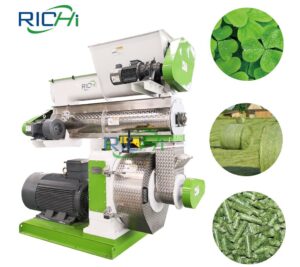
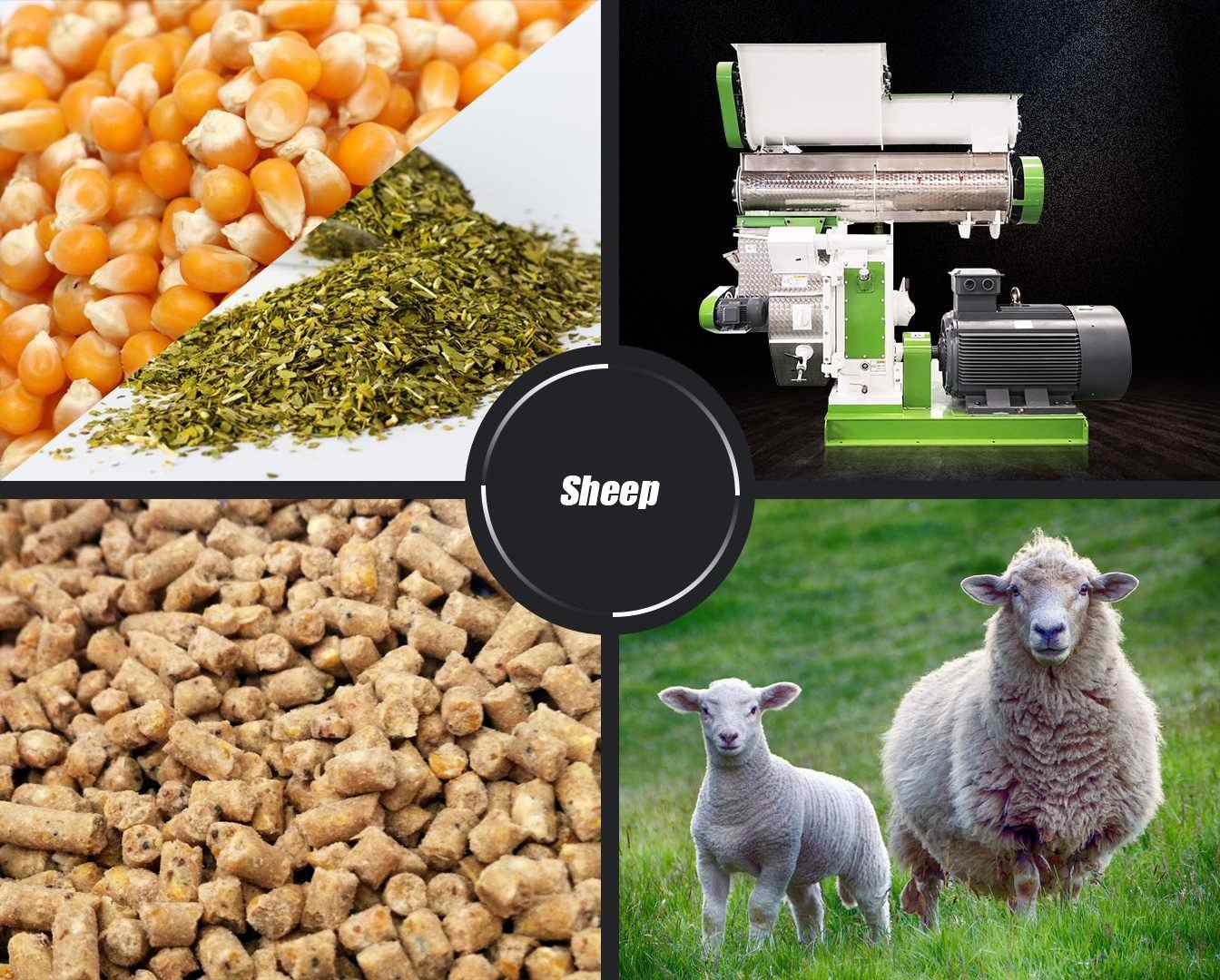
Every pelleting operation starts with a pellet maker for animal feed. But not all pellet makers are created equal. The equipment you choose will determine not only the quality of your pellets but also your operating costs and how much time you spend on maintenance.
For goat feed specifically, there are special considerations. Goats prefer pellets that are firm but not overly hard. Too soft, and the pellets crumble into dust—which goats avoid because it can cause respiratory issues. Too hard, and goats may reject them or struggle to chew them. The ideal pellet for goats has enough density to hold together during handling and transport, but yields easily when chewed.
The die selection matters. Smaller dies produce smaller pellets, which are suitable for kids and younger animals. Larger dies produce bigger pellets, which older goats can handle comfortably. Many farmers choose a mid-range size, around 4-6 millimeters, as a compromise that works for all age groups.
The formulation also influences equipment requirements. Goat feed typically includes a higher proportion of fibrous ingredients than poultry or swine diets. These fibrous materials can be challenging to pellet because they don’t bind as readily as grains. The right machine will handle this without clogging or producing weak pellets.
What Makes a Machine Reliable
Feed pelleting equipment operates under demanding conditions. Continuous operation, abrasive ingredients, and variable moisture all take their toll. A machine that’s built with thin metal or under-specified components will need constant repairs and replacements—and the downtime will cost you far more than the initial price difference.
For serious producers, a stable running goat feed pellet making machine for sale is what you should be looking for. Stability means consistent performance without unexpected breakdowns. It means the machine handles variations in your ingredients without producing inconsistent pellets. It means you can run it for hours at a time without overheating or losing efficiency.
What makes a machine stable? Heavy-duty construction is the foundation—thick steel frames, oversized bearings, and precision-machined components. The die should be made from wear-resistant alloy that maintains its tolerances over thousands of operating hours. The drive system should be robust enough to handle the loads of compression without strain. And the control system should allow you to adjust parameters to match your specific feed formulation.
Getting the Right Support
Investing in a pellet maker is a significant decision, and you want to be confident that you’re getting a quality product from a manufacturer who stands behind it. A Richi Machinery pellet maker for animal feed combines robust construction with user-friendly features that make operation straightforward even for first-time users. Their goat-specific models include tailored die configurations and conditioning systems that optimize pellet quality for fibrous ingredients. The machines are designed for continuous operation, with easy-access maintenance points that minimize downtime.
The support doesn’t end with the purchase. Installation guidance, training for operators, and responsive technical assistance are essential services that separate a good manufacturer from a great one. A manufacturer who knows goat nutrition can also help you fine-tune your formulations for optimal pellet quality and feed efficiency.
The Complete Production Picture
A pellet maker is the heart of the operation, but it doesn’t work in isolation. A complete on-farm feed production system includes several other components.
Grinding equipment reduces grains and forages to a uniform particle size. This is essential for even mixing and consistent pellet quality. A hammer mill is the standard choice for most operations, offering flexibility to process different ingredients.
A mixer ensures that all ingredients are thoroughly blended before pelleting. Uneven mixing means uneven pellets, which means some animals get too much of one nutrient and not enough of another. A good mixer eliminates this risk.
A cooler is necessary after pelleting. Fresh pellets emerge hot and slightly moist. Cooling them hardens them and prevents spoilage during storage. A simple cooling conveyor with airflow is sufficient for most operations.
Screening equipment removes fines and broken pellets, which are recycled back into the process. This maintains pellet quality and ensures that every bag of finished feed meets your quality standards.
The Farmer Who Made the Switch
A goat dairy in the mountain region of North Carolina had been buying commercial pelleted feed for years. It was convenient, but the quality was inconsistent. Some batches were dusty; others were too hard. The goats sometimes went off their feed when a new batch arrived. And the price kept climbing.
The owners decided to take control. They installed a small-scale feed production line with a grinder, mixer, and pellet maker. They sourced grains locally and made their own haylage for forage. They worked with a nutritionist to develop formulations for their different production stages—dry does, lactating does, growing kids, and breeding bucks.
The results were remarkable. Feed costs dropped by 22% in the first year. Milk production increased because the goats were consuming more consistent nutrition. The health issues related to feed changes disappeared. And the owners found that they could sell surplus pellets to neighboring farms, creating an additional revenue stream.
Looking Beyond Costs
The economic benefits of on-farm feed production are obvious, but there are other advantages worth considering.
You gain control over ingredient quality. You know exactly what’s going into your feed—no mystery ingredients, no fillers, no surprises. You can choose organic sources, avoid specific additives, or incorporate local ingredients that support your community.
You gain flexibility. Commercial feed mills have minimum order quantities and limited formulation options. On-farm production lets you switch formulations instantly based on your animals’ needs. You can adjust for changes in forage quality, seasonal variations, or specific production goals.
You gain independence. You’re not at the mercy of feed price increases, supply disruptions, or delivery delays. Your feed supply is under your control, which is valuable in a volatile market.
Making It Work
The transition to on-farm feed production is not without challenges. You need to invest in equipment, learn new skills, and manage a more complex operation. But the benefits are substantial, and the payback period is typically 18 to 36 months.
Start with a realistic assessment. Calculate your current feed costs and estimate the potential savings. Research equipment options and get detailed quotes. Consider the space you need for storage and equipment. Talk to other farmers who have made the switch.
Choose equipment that matches your scale. Too small and you’ll be constantly running to keep up. Too large and you’ll have unnecessary capital and operating costs. A manufacturer with experience in goat feed can help you find the right balance.
For more detailed information on specifications and configurations, you can look here to explore the options that fit your operation.
A Final Perspective
Every goat farmer knows that margins are tight. The difference between a profitable year and a loss often comes down to managing costs effectively. Feed is the biggest cost you have, and it’s also the one where you have the most opportunity to save.
Pelletizing your own feed isn’t just about saving money. It’s about taking control of the quality of what goes into your animals. It’s about building a more resilient operation that can weather market fluctuations. It’s about turning your feeding program from a passive expense into an active part of your farm’s success.
The goats will always need to eat. The question is whether you’re going to keep paying for what you throw away, or start producing feed that every dollar buys you real nutrition. The answer is simpler than you think—and the equipment to do it is more accessible than ever.
view more:https://pelletizerextruder.com/goat-feed-pellet-making-machine/