Searching for a grass pellet machine for the first time can produce hundreds of equipment listings, specifications, and price claims. However, choosing a machine should not begin with the lowest quoted price or the largest capacity shown on a product page. Biomass behaves differently from one material to another, and grass-based feedstock creates several practical processing challenges.
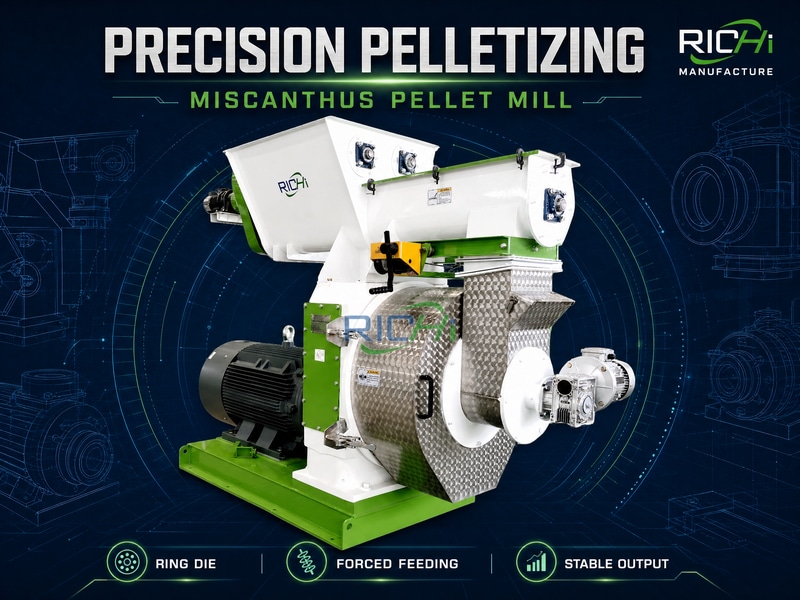
For a business considering a miscanthus pellet mill, the purchasing process should begin with the raw material rather than the machine itself. The condition of the miscanthus determines what preparation equipment is required, while the intended pellet application determines the final production requirements.
Start With the Raw Material
Miscanthus is a fibrous biomass material. Depending on harvesting methods and storage conditions, it may contain long stalks, varying moisture levels, and different amounts of leaves and other plant material. These characteristics influence crushing, feeding, drying, and pellet formation.
A serious equipment evaluation therefore needs information about the material before a final machine is selected. Moisture content, particle size, bulk density, seasonal availability, and the presence of other biomass materials can all affect the production process.
A supplier may recommend different configurations for dry stored miscanthus compared with freshly harvested material. The difference is not simply a matter of machine size. It can affect the entire process layout.
Look Beyond the Main Motor
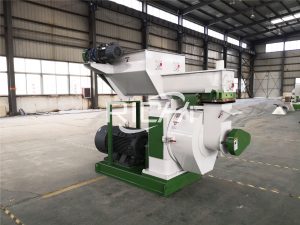
Motor power is an important specification, but it does not tell the whole story. Buyers should also understand how the material reaches the pelleting chamber, how feeding is controlled, what type of die is used, and how the transmission system is designed.
Fibrous biomass can be difficult to feed consistently because its structure is very different from dense grain-based materials. A suitable feeding arrangement helps maintain a stable material flow and reduces the risk of irregular loading.
The die is another important component. Miscanthus contains tough fibers and mineral components that can contribute to wear. A suitable die material and compression configuration should therefore be considered alongside expected production volume.
Consider the Complete Processing Line
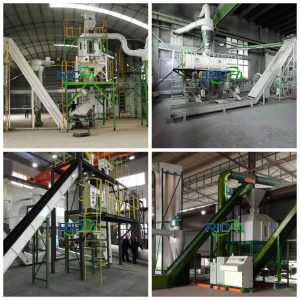
Buying a pelletizer without understanding the rest of the process can create problems later. If the feedstock is too wet, a dryer may be necessary. If the stalks are too long, a crusher or hammer mill may be required before pelletizing.
After compression, hot pellets normally need cooling before they can be safely screened and packaged. Fines generated during production can also be separated and returned to the process when appropriate.
This is why equipment buyers should evaluate the whole material flow instead of comparing standalone machines. When researching suppliers, you can look here for information about how a complete biomass process can be configured around the pellet mill.
Capacity Is Not the Same as Actual Production
A machine’s nominal capacity should not automatically be interpreted as guaranteed output under every condition. Actual throughput can vary with moisture, particle size, die configuration, raw material composition, and operating practices.
For example, a system designed for a particular grass may perform differently when the material is mixed with straw or another biomass. Investors should therefore discuss the intended raw material combination with the equipment supplier before finalizing the machine model.
The expected annual operating schedule also matters. A machine used for seasonal production may have different requirements from one operating continuously throughout the year.
Think About Maintenance Before Installation
Maintenance planning is often overlooked during the buying stage. Access to bearings, transmission components, dies, rollers, lubrication points, and electrical systems should be considered when designing the plant layout.
A reliable machine is not simply one that operates well on its first day. It should also be practical to inspect and maintain over years of operation. Spare-part availability and technical support can therefore be just as important as the initial equipment quotation.
Making a Better Equipment Decision
The right purchasing decision connects the raw material, desired output, final pellet specifications, factory conditions, and future expansion plans. A compact machine may be ideal for a farm-based project, while a larger biomass supplier may require a multi-machine production system.
Instead of asking only whether a particular machine is available, buyers should ask whether its feeding, drying, pelleting, cooling, and handling systems match their actual production conditions.
A complete pellet plant can provide greater process control because every section is designed to work together. For investors entering the biomass industry, this integrated approach can reduce unexpected modifications after installation and make future capacity planning easier.
view details: https://www.richimanufacture.com/grass-pellet-machine/